
Sedlčany City Museum
The first exhibition of collected historical items took place in November 1894 at the inn U Karla IV.
The founding of the museum in Sedlčany is closely connected with preparations for the Czechoslavic Ethnographic Exhibition in Prague in the mid-1890s. On the initiative of the Agricultural Association, a district ethnographic committee was formed in autumn 1893, with teacher Čeněk Habart elected as its secretary. This native of Předbořice greatly contributed to the museum’s creation. He collected and recorded all expressions of the local folk culture: customs, traditions, tales, sayings, proverbs, songs, etc. He also engaged in literary work. His ethnographic efforts culminated in the four-volume work Sedlčansko, Sedlecko a Voticko, written with help from fellow teachers and local collaborators.
The Agricultural Association and the district ethnographic committee launched an extensive campaign to promote the collection of historical objects. It was decided that the Sedlčany district would participate in the Prague exhibition as an independent museum. The founding general meeting took place on 10 June 1894 in the district offices. Among other things, the first committee of the District Museum in Sedlčany was established, with principal Jan Baxa elected as its chairman.
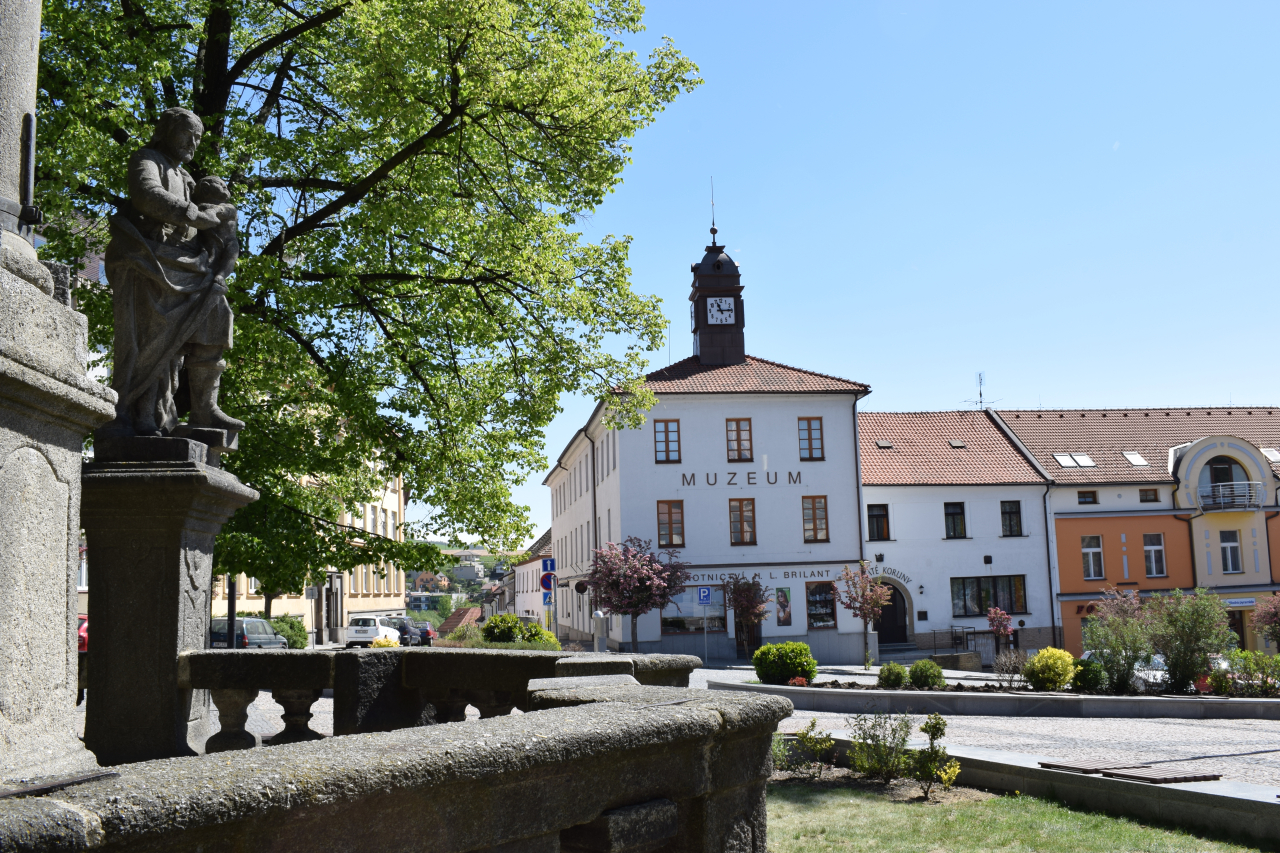
The City Museum is located in the renovated “old” town hall building, which dates back to the 16th century. It houses a permanent exhibition focused on the Sedlčany region. It highlights notable figures such as pond engineer Jakub Krčín and composer Josef Suk. The hall on the ground floor hosts temporary exhibitions and also functions as a museum café. (Exhibits include items from prehistory, the Middle Ages, both World Wars, knight’s armor, weapons, a facsimile of the rare Krčín hymn book, a mammoth stool, a high-wheeled bicycle from the late 19th century, bomber wreckage from WWII, and hundreds of other objects, documents, and photos from the past and present.)

