


Glass Museum Lenora
The village of Lenora is located in the valley of the Warm Vltava River in the Bohemian Forest, about 15 km south of the town of Vimperk.
The Lenora glassworks was founded in 1834 by Jan Meyer. The new glassworks Eleonorenhain (Eleonore's Grove) was named after Eleonore, the wife of the estate owner Jan Adolf Schwarzenberg. Later, the name was simplified to its current Czech form. In the second half of the 19th century, the factory was one of the largest and most modern glassworks in Austria-Hungary. To this day, the original worker’s houses near the factory, which form a valuable example of folk architecture, have been preserved.
The glassworks became famous not only for its very high-quality crystal glass but also for its characteristic green glass, known as Lenora Green. Lenora was home to glassmaker Pavel Meyr, who received a gold medal from Emperor Franz II for rediscovering the process of producing ruby glass. The main products included a special type of English glass, ordinary drinking glasses, and window glass. The Lenora glassworks also housed a painting workshop, where, from 1869, the famous painter Jan Zachariáš Quast worked. Before arriving in the Bohemian Forest, Quast had worked on six modern stained-glass windows for St. Vitus Cathedral in Prague.
Glass from Lenora earned numerous medals at many European exhibitions. At the 1867 World’s Fair in Paris, the Lenora glass of the then-owner Vilém Kralik received the highest award. It was also highly successful at the 1873 World’s Fair in Vienna. The glassworks survived the turn of the century and the First World War, and during the interwar period, it exported up to 90 percent of its production to the United States, India, England, and Belgium.
After the Second World War, the glassworks focused on producing blown glass and introduced a new type of art glass called Lenoár. In 1968, the Lenora glassworks was modernized and produced lead crystal products as well as richly cut clear glass. The end of this famous glassworks came with the unsuccessful privatization in 1995. Since then, ownership has changed hands, and only ruins remain of the once world-renowned glassworks.
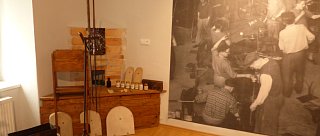
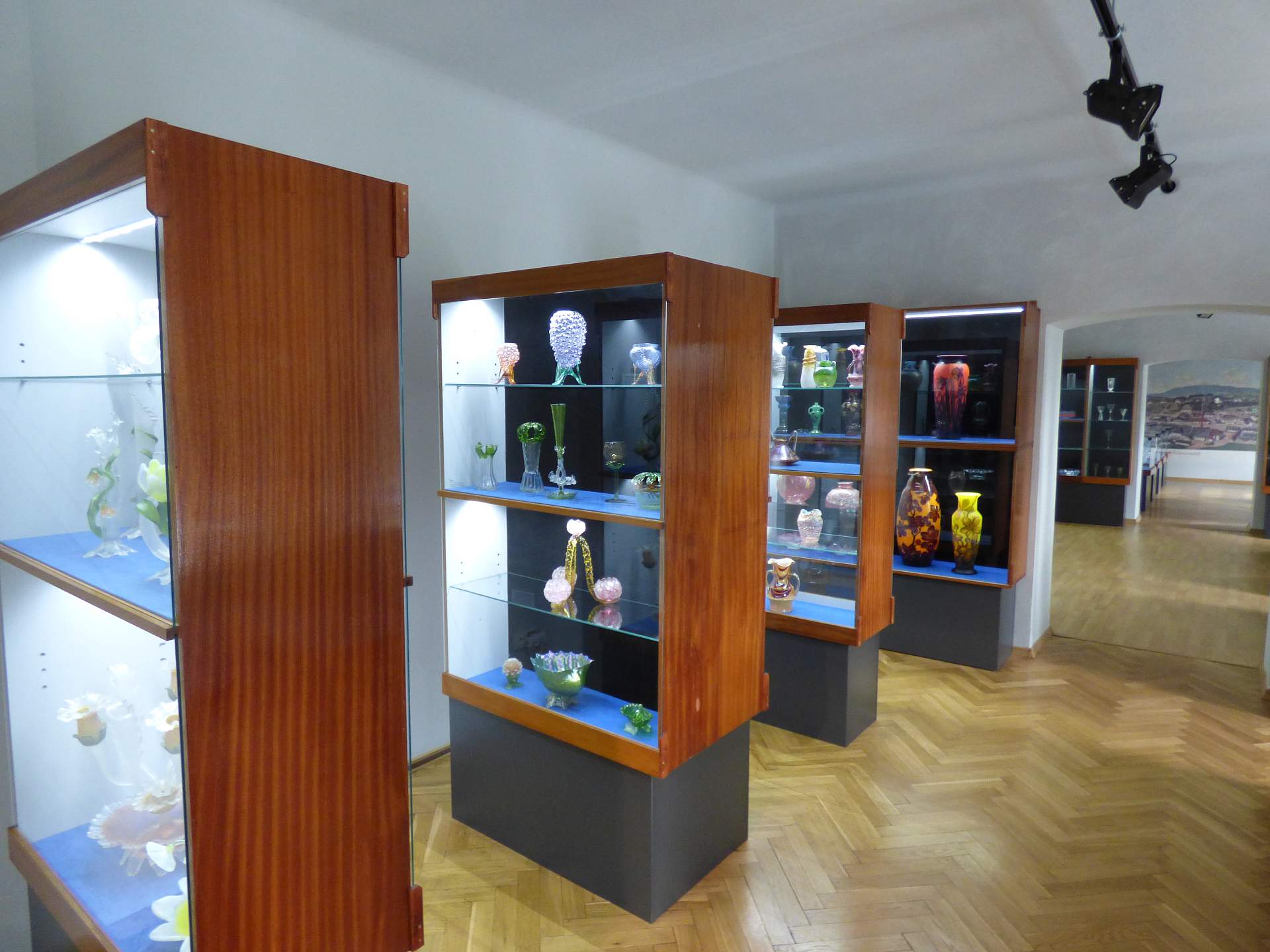
Examples of the famous Lenora glass can be admired at the local Glass Museum, located in the municipal office building. In addition to the glass museum, visitors can also see a small glassworks or a glass-cutting workshop.
How to get there
The museum is located in the building of the Lenora municipal office.

