
Discover the Gardens and Parks of Český Krumlov
Český Krumlov boasts an incredibly rich natural setting — and you can even encounter nature and greenery within the city itself.
People usually come to Český Krumlov for its historical monuments and cultural offerings. But few realize how rich the natural surroundings are — and that nature is present even right in the heart of the city.
City Park
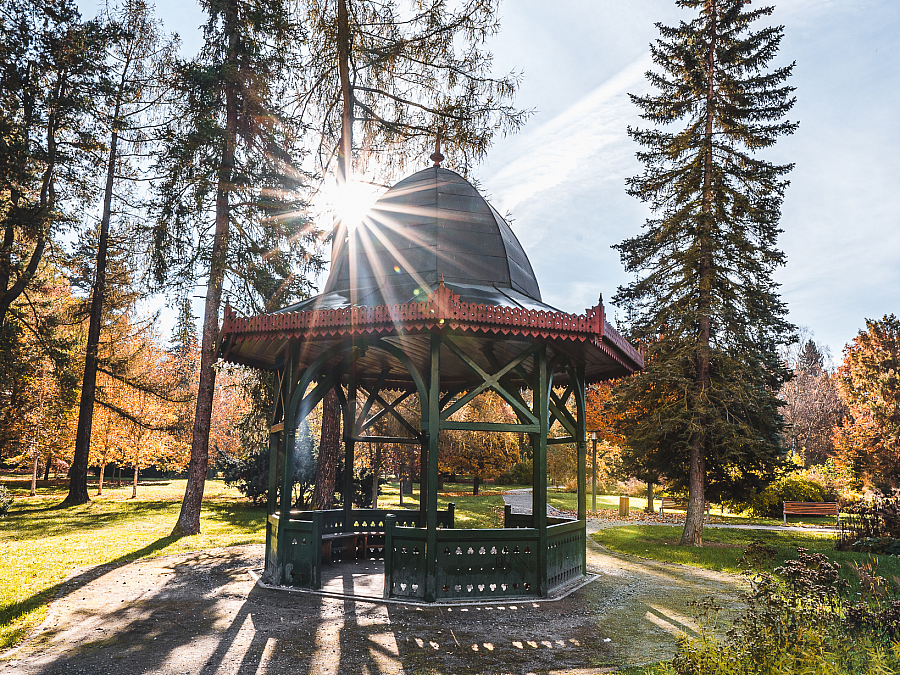
The city park, covering about 2.5 hectares, is located in the center of Český Krumlov on the left bank of the Vltava River. It takes just five minutes to walk there from the square via Kájovská Street or through the “Mouse Hole” and left across the Dr. Eduard Beneš Bridge. Children will enjoy a visit — there’s a large playground. In summer, they can play in the shade or cool off in the river at a newly built water access point.
Since the late 16th century, the current park area served as a relaxation spot and Jesuit garden. Major changes came around the turn of the 19th and 20th centuries, when the so-called Jesuit Garden became municipal property. In 1885, a river bath opened here, and around 1900 a playing field that doubled as a summer training ground and a winter skating rink. In 1908, the area was landscaped into a park.
Today, you’ll find many fascinating trees and shrubs — both coniferous and deciduous, native and exotic. Sculptures are placed freely among the greenery, and there are also several interesting structures. Not to be missed is the wooden music pavilion built before WWI and still in use through the 1950s. Also worth noting is the Chapel of St. Martin from 1717 with Baroque furnishings. A cemetery stood nearby until 1892.
Nearby points of interest: Synagogue, Museum Fotoatelier Seidel, Egon Schiele Garden Studio, children’s traffic playground, Plešivec stairs and square with a view of the town.
Monastery Gardens
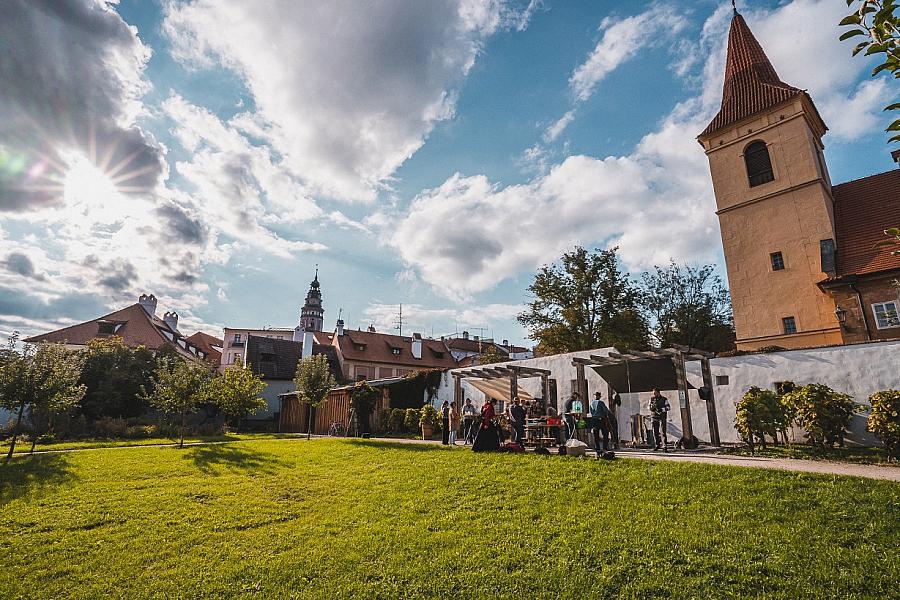
The gardens of the Minorite Monastery — the oldest preserved gardens in Český Krumlov — are also located in the historic town center. From the main street Latrán, walk through Monastery Lane (opposite the first castle courtyard entrance). Soon after the monastery was founded in 1350, the friars created a convent garden and a vegetable plot where they also grew medicinal herbs.
From the early 19th century, townspeople began renting the convent garden. In 1950, the friars were expelled, and the gardens became an allotment colony.
The city reopened the monastery complex to the public in 2015 after a five-year restoration, including the gardens. Their value lies not only in their age but also in their centuries-long tradition of growing healing and useful plants, grapevines, fruit trees, and vegetables. Promoting this horticultural heritage was one of the main goals of the garden’s revival.
The garden’s plant collection is now used for educational programs. Grape vines were replanted and the first harvest occurred in 2017. You’ll also find an insect hotel designed as a miniature monastery. In the lower garden, the original pavilion building — once part of the monastery’s bowling alley — can still be seen.
Nearby points of interest: exhibitions and craft workshops in the monastery complex, brewery, Red Gate, first castle courtyard, Latrán street, Vltava riverside
Deer Garden (Jelení zahrada)
The name "Jelení zahrada" (Deer Garden) dates back to the 18th century and reflects its original use as a deer enclosure. The park, affectionately called "Jelenka" by locals, spans seven hectares on the northern slope of the castle hill in the wide valley of the Polečnice stream. Its central part (with a parking lot and the former “cone drying house,” now a restaurant) stands where a Renaissance garden once was.
The wooded area between the castle and the stream resembles a mixed deciduous forest with thick undergrowth. The left-bank section along Chvalšinská Street is a grassy meadow with scattered trees and tree groups.
In summer 2020, a new nine-hole disc golf course was added, designed for beginners and intermediate players with respect for existing walking and cycling routes.
Nearby points of interest: Budějovice Gate, Luna Cinema from the 1970s, Masaryk Street with First Republic buildings, Cloak Bridge
Terraces and Garden near the Schiele Garden House
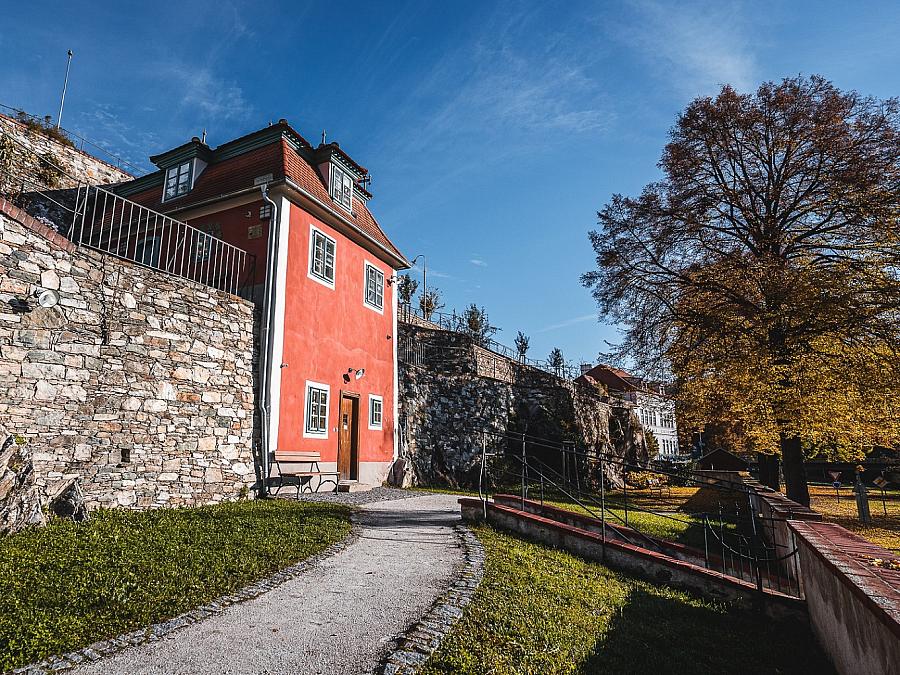
This location in the southern meander of the Vltava is another peaceful green oasis. It offers a quiet spot to enjoy fresh air, plus some activities for little ones like a children’s traffic playground shaded by mature trees.
The house on the sloped terrace was built around 1800 and gained fame when painter Egon Schiele (1890–1918) lived there in 1911. A local high school student, Willi Lidl, arranged for Schiele to stay, negotiated the lease, and helped organize renovations. Thanks to the generosity of the owner, textile merchant Max Tschunka, Schiele lived there rent-free. He painted iconic views of Krumlov on wooden panels — including The Town on the Blue River, The Dead City, Night Krumlov, and Rooftops of Krumlov.
Schiele loved the house and its blooming terraces. Today, the terraces remain full of flowers and vines. In summer, you can sunbathe or swim in the Vltava — there’s a gentle entry into the water.
Nearby points of interest: Synagogue, rose garden, Plešivec Square, city park

