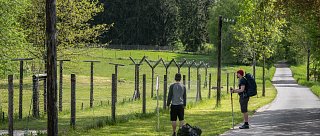


Iron Curtain – Life at the Border Guard Posts
The border guard posts had their own cooks and conscripted soldiers, and in some units, especially in earlier times, even their own farms where domestic animals were raised and vegetables were grown for the needs of the unit members.
In the 1950s and 1960s, living conditions at the border posts were spartan. Soldiers usually lived in inadequate or temporary buildings. This began to change more significantly in the following decades when many posts moved into renovated buildings or new constructions.
The time between service and sleep was often filled with cleaning the post and its surroundings or other work as needed. From the early 1960s, soldiers were granted weekly border leave. This was a period meant for personal time—soldiers could go for walks, read books, sleep, or engage in sports. In the 1970s and 1980s, border guards—just like those in the regular army—were entitled to two 10-day vacations per year, which had to be used in full. So-called short-term leave to leave the post, known as “Opušťák”, was not a right. It was granted as a reward or at the discretion of the commanding officer.
Total length
90 km
Duration
a few days
Terrain
Road
Recommended period for visiting
Spring, Summer, Autumn
Difficulty level
Moderate
Route description
Soldiers usually lived in inadequate or temporary buildings. This situation began to improve significantly in the following decades when many posts relocated to renovated or newly built facilities.
Interesting places on the route
- Open-Air Museum of Border Protection and the Iron Curtain at the Nové Hrady – Pyhrabruck border crossing
- Nové Hrady
- Žofín Primeval Forest
- Svatý Kámen (Holy Stone)

